June 21st, 2013

There are several reasons why some people’s teeth grow in crooked, overlapping, or twisted. The most common is hereditary, while other causes include irregularly-shaped teeth or jaws, premature loss of baby teeth, and habits such as thumb-sucking or tongue thrusting. It is very important that you schedule an appointment at Diehl Orthodontics so that we can make an early diagnosis and treatment plan that will best suit your or your child’s needs.
Establishing a proper bite is not just cosmetic but can dramatically improve our patients' dental and overall health.
Crooked teeth can:
- Interfere with proper chewing
- Hinder proper oral hygiene, which increases the risk of tooth decay, cavities, and gingivitis
- Strain the teeth, jaws, and muscles, increasing the risk of breaking a tooth
Orthodontics is easier today than ever before, with treatment options at Diehl Orthodontics that fit your lifestyle and schedule. We look forward to helping you or your child achieve the bite and smile that will last a lifetime. Give us a call at our convenient Redlands, CA office to book your initial consultation.
June 14th, 2013
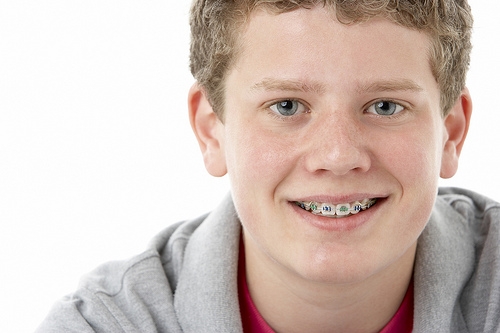
One exciting part about wearing braces from Diehl Orthodontics is getting to choose the colors of your rubber bands. Orthodontists place elastic bands, or ligatures, over each bracket to secure the archwire in place. These rubber bands may be individual or connected, depending on your mouth’s needs. From Dr. Byron Diehl, you have the option of choosing the color of your elastics, which are changed about once every month at every visit. Our offices keep a color wheel handy to help you choose which ones suit you best!
Children and teens often enjoy picking different colors each month to express their creativity and coordinate their braces with outfits. Decorating your mouth with your favorite colors is fun for kids and takes some of the stress out of wearing braces. Adults who wish for subtlety have color options that blend in with the metal brackets and archwire. Common choices for adults include silver, clear, and gray tones.
Common Color Combinations for Rubber Bands
With individual ligatures for each bracket, you may choose different color combinations for special events. You can have alternating colors or place an entire rainbow over your teeth. Here are a few options to consider:
- School spirit colors
- Favorite sports team colors
- Patriotic colors
- Holiday themes
Some patients choose only one color to match their mood, personality, or favorite outfits. The palette of choices allows you to make bold statements with your braces or go for subtler tones that blend in with the metal structures. Keep in mind that bright colors make your teeth look whiter, while lighter shades, such as yellow and white, may cause your teeth to appear less bright.
What Your Rubber Band Color Says About You
- Red tones indicate that you are ready for action and take charge of your life with aggressive, forward-thinking steps.
- Blue tones are calm and relaxing. You are conservative and exhibit integrity when dealing with situations.
- Green tones represent growth and balance. You are level-headed and look for opportunities to grow emotionally and spiritually.
- Purple tones attract creative energies. You like to have fun and use your imagination in every aspect of your life.
- Orange tones indicate that you are optimistic and thrive in social situations where communication is open.
- Pink is a romantic color that represents a caring personality. You also enjoy having fun with silly games and endless laughter.
June 7th, 2013

In honor of June being Dairy Month, Dr. Byron Diehl and our team at Diehl Orthodontics would like to remind our patients about the importance of dairy to your overall health! Regular consumption of dairy products, such as milk, cheese, and yogurt, has been found to lower your chances of contracting gum disease (also known as periodontal disease).
Those who consume at least 55 grams of lactic acid a day are less at risk for gum disease. Eating dairy is not just healthy for building strong bones, but is essential for maintaining a strong, healthy mouth and a smile that will last a lifetime.
Questions about which foods you should steer clear of and which you should enjoy? Give us a call or ask us on Facebook!
May 31st, 2013
Many developing orthodontic problems can be intercepted and corrected if diagnosed and treated at an early age. Dr. Byron Diehl and our team at Diehl Orthodontics recommend children have their first orthodontic evaluation no later than age seven, or younger if the front four permanent teeth have replaced the baby teeth. Early treatment, also known as interceptive treatment or Phase I treatment, provides both timely detection of problems and greater opportunity for more effective treatment. Early intervention guides growth and development, preventing serious problems later.
If your child is showing these signs, it may be time to think about early orthodontic treatment:
- Early or late loss of baby teeth (your child should typically start losing teeth around age five or six, and will have all their permanent teeth in around age 12 to 13)
- Difficulty chewing and/or biting
- Mouth breathing
- Sucking his or her thumb
- Speech impediment
- Protruding teeth (the top teeth and the bottom teeth extend away from each other)
- Crowded front teeth
- Teeth that don't come together in a normal manner or even at all
Early intervention will greatly reduce the severity of your child’s case, and therefore reduce the length of treatment time and cost for a second phase of treatment when all of his or her permanent teeth have erupted. An evaluation at our Redlands, CA office will determine if your child’s dental and skeletal growth is proceeding properly or if interceptive treatment is needed. Many times, a more severe problem can be corrected using sophisticated removable appliances instead of traditional orthodontic treatment.
To schedule a consultation for your child to visit with Dr. Byron Diehl, please give us a call! We will provide your child with an initial exam, and discuss with you the best steps to take toward caring for your child's smile.

 Website Powered by Sesame 24-7™